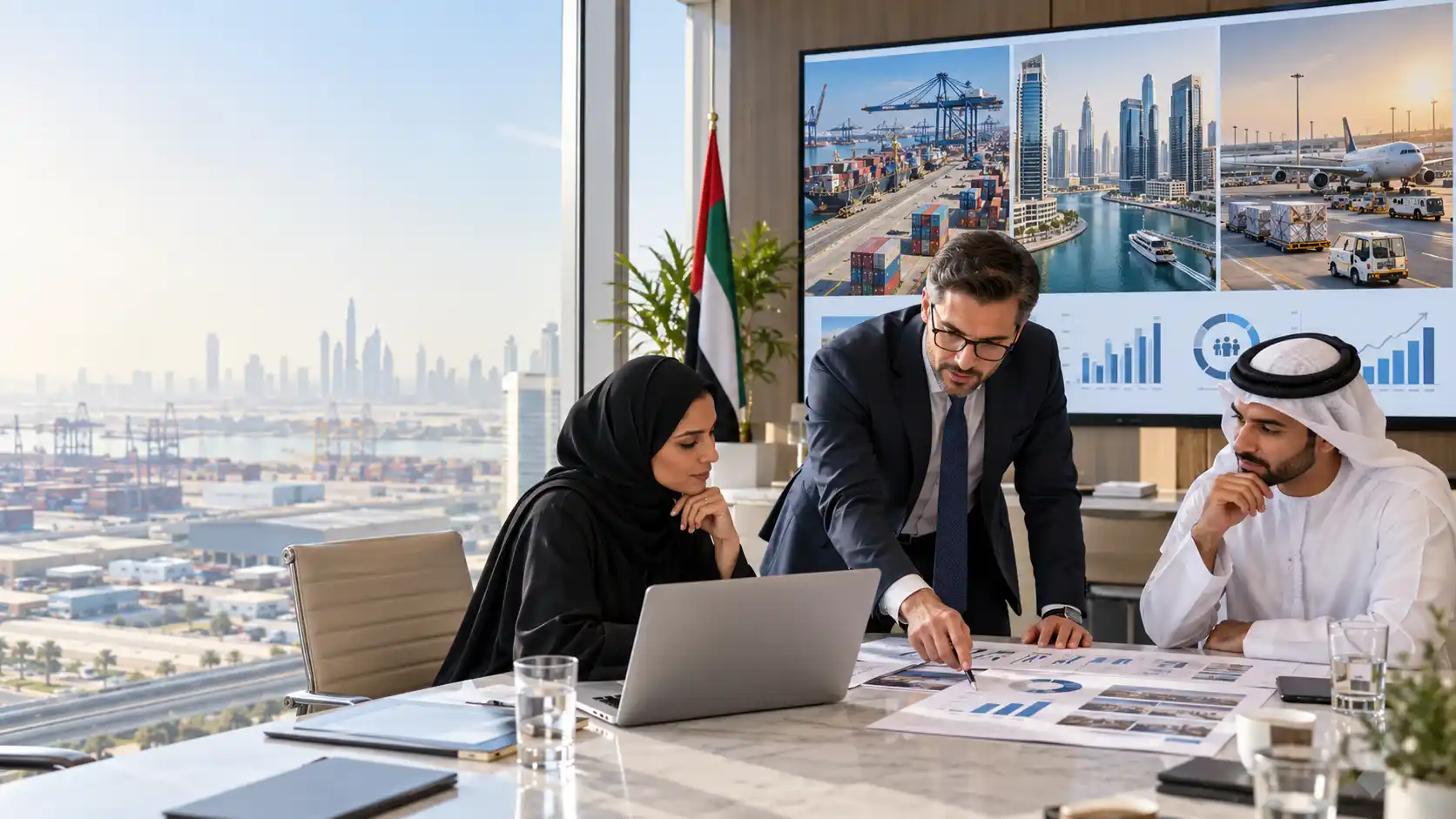



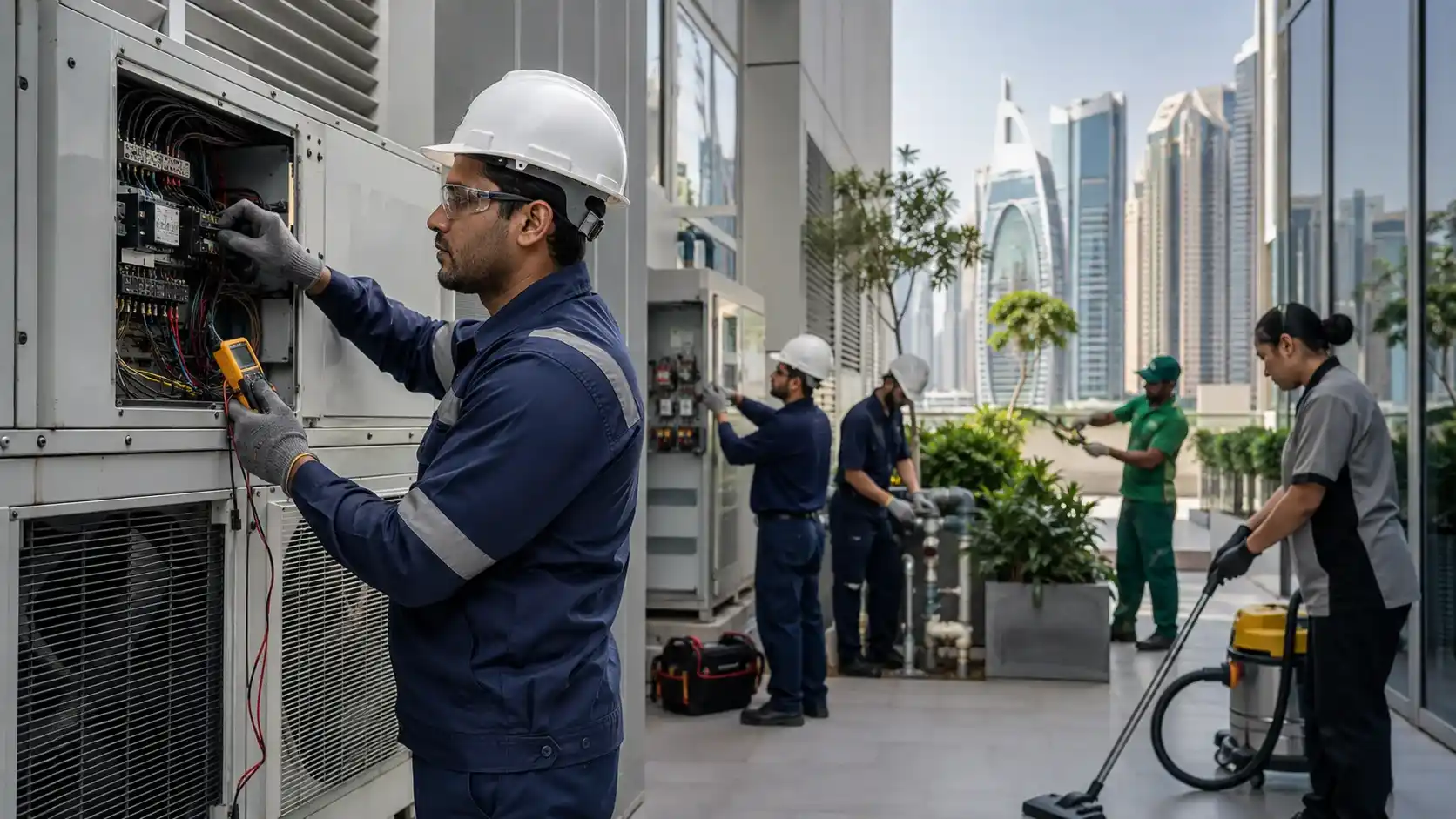
An FM company in Dubai wins a new contract covering a forty-story commercial tower and has six weeks to mobilize a full team: HVAC and MEP technicians for the technical systems, plus cleaners, security, and landscaping staff for everything else. Two entirely different sourcing challenges, running on two different timelines, need to close simultaneously.
That dual challenge defines facility management staffing in the UAE: hard services and soft services genuinely require different sourcing approaches. Before mobilizing either team, it is worth having a plan to audit your current FM staffing mix against what the specific contract actually requires.
This guide sets out how hard and soft services sourcing actually differ, what qualifications genuinely matter for technicians, when a multi-skilled hire beats a specialist, and the bulk hiring methods FM companies use to mobilize large teams fast.
|
Quick Answer Facility management staffing splits into hard services, technical roles like HVAC, electrical, and MEP technicians typically needing an ITI diploma and GCC experience, and soft services, cleaning, security, and landscaping staff sourced through different, often higher-volume channels. Multi-skilled technicians suit smaller or lower-complexity sites, while larger facilities generally still need dedicated trade specialists. Bulk walk-in hiring events remain the standard method for volume roles in both categories. |
Hard Services vs Soft Services Sourcing
The distinction between hard and soft services shapes almost every sourcing decision that follows: who to hire, what to verify before hiring, and how quickly a given role can realistically be filled. Treating both categories as one undifferentiated staffing challenge is the most common planning mistake in FM contract mobilization.
Some larger FM operators organize their recruitment teams around this same split internally, with dedicated technical recruiters handling hard services roles and a separate, higher-volume recruitment function handling soft services, reflecting how genuinely different the two hiring processes are in practice.
|
Category |
Typical roles |
Sourcing approach |
|
Hard services |
HVAC, electrical, plumbing, MEP, lift, fire safety technicians |
Certified technical hiring, GCC experience filter |
|
Soft services |
Cleaning, security, landscaping, pest control staff |
High-volume sourcing, often bulk events or manpower supply |
|
Overlap roles |
Multi-skilled technicians, site supervisors |
Mixed approach depending on site complexity |
How Annual Maintenance Contracts Shape Staffing
Most UAE facility management work runs through Annual Maintenance Contracts, structured agreements covering a defined scope of preventive and reactive maintenance over a twelve-month cycle. These contracts typically specify minimum staffing ratios, response time guarantees, and specific certification requirements the FM provider must meet throughout the contract term.
This structure means staffing decisions are rarely one-time hiring events. A won AMC contract creates an ongoing obligation to maintain agreed staffing levels for the full contract duration, including covering for leave, turnover, and seasonal demand shifts, which is why many FM companies maintain a standing bench of pre-vetted candidates rather than starting from zero each time a contract renews or a new one is won.
Understanding the specific staffing ratios and certification requirements written into a contract before bidding on it, rather than discovering them after signing, avoids the common problem of winning a contract the company cannot actually staff to the agreed standard within the mobilization window.
Penalty clauses tied to missed response times or understaffing are common in larger AMC agreements, which means a staffing shortfall is not just an operational headache but a direct financial risk written into the contract itself. Building a small staffing buffer above the strict contractual minimum, particularly for hard services roles that take longer to replace, protects against this exposure.
What Actually Qualifies an HVAC Technician
An ITI diploma or recognized technical certificate in HVAC or refrigeration is the standard baseline qualification UAE employers look for. Beyond entry-level roles, two to three years of hands-on GCC experience genuinely matters, since regional systems, climate load, and common equipment brands differ meaningfully from what a technician trained elsewhere would have encountered.
Familiarity with specific major brands, such as Daikin or similar VRV system manufacturers common across UAE commercial buildings, is often a practical hiring filter worth screening for directly rather than assuming general HVAC training covers it. Electrical, plumbing, and MEP technicians face parallel expectations: recognized certification plus regionally relevant hands-on experience.
Lift and fire safety technicians sit in an even more tightly regulated category, since these systems carry direct life-safety implications. Many UAE authorities require lift maintenance to be performed only by technicians certified against the specific lift manufacturer's own standards, and fire safety system maintenance often requires civil defense-approved certification separate from general MEP qualifications. Verifying these specific certifications before deployment, not just general trade competence, is essential for these two categories.
Multi-Skilled Technician or Dedicated Specialist
For smaller residential communities or lower-complexity commercial properties, a multi-skilled technician who can handle basic HVAC, electrical, and plumbing issues offers genuine cost and scheduling efficiency, since one person covers the routine first-response maintenance load that would otherwise require three separate specialists on call.
Larger, more complex facilities generally still need dedicated trade specialists for anything beyond routine work. A multi-skilled technician handling a major MEP system failure in a large commercial tower is a genuine risk, both to the equipment and to the technician, so the sizing decision should follow site complexity rather than defaulting to whichever model costs less on paper.
A practical middle ground many mid-sized FM operators use is staffing multi-skilled technicians for first-response and routine work, with a smaller number of dedicated specialists on call or contracted for escalations. This hybrid model balances cost efficiency against the genuine technical risk of asking a generalist to handle work beyond their depth.
How Bulk Technician and Cleaning Staff Hiring Works
Bulk walk-in interview events, commonly held in industrial hiring hubs such as Al Quoz, Sonapur, or Dubai Investment Park, remain the standard method for volume technician and cleaning staff recruitment, letting an FM company screen and hire dozens of candidates across a single day or weekend. For rapid mobilization beyond what direct bulk hiring can cover in the available timeline, using manpower supply to mobilize an FM contract fast is a common complementary approach.
Senior FM management, engineering leads, and specialist roles requiring deep technical expertise are rarely sourced through bulk events. These positions call for targeted outreach, specialist recruitment channels, or direct headhunting, since the pool of genuinely qualified candidates is small enough that a walk-in interview format simply is not efficient for finding or evaluating them.
Where Security Personnel Fit Differently
Security personnel included within an FM contract are not simply another soft-services category. The separate SIRA licensing security personnel need within an FM contract applies in full, requiring both a company-level licence and individual guard certification, distinct from the trade licensing that covers other FM service categories.
FM companies handling contracts generally need standard trade licensing appropriate to their overall service scope, and individual technicians in regulated trades may need role-specific certification depending on the emirate and the exact system being serviced, which is worth confirming for each specific trade rather than assuming one licence covers the full contract.
For FM companies bundling security into a broader contract offering, this means budgeting for a genuinely separate compliance process, including the SIRA training lead time covered elsewhere in this series, rather than treating security staffing as simply another line item that scales the same way as adding an extra cleaner or landscaper to the team.
Technician retention connects to the same broader UAE workforce patterns affecting other blue-collar segments. How technician retention connects to broader UAE workforce patterns is worth reviewing for context on what actually keeps skilled technical staff in place long enough to build the site-specific knowledge that makes them valuable.
This retention question matters more in FM than it might first appear, since a technician who understands a specific building's quirks, past issues, and system history genuinely performs better than an equally qualified replacement starting from zero, making turnover a real productivity cost beyond the obvious rehiring expense.
Two Sourcing Challenges, One Contract
Successful facility management staffing treats hard and soft services as genuinely different sourcing problems rather than one undifferentiated hiring push. Getting technician qualifications right, sizing multi-skilled versus specialist roles to site complexity, and using bulk events or manpower supply appropriately for volume roles covers most of what a new FM contract mobilization actually requires.
For UAE and GCC employers who want their FM staffing plan and wage benchmarks reviewed properly, reaphr.com/companies outlines how ReapHR supports employer-side hiring strategy, from the initial contract bid through full team mobilization.
|
Work With ReapHR ReapHR supports UAE and GCC employers on specialist and blue-collar hiring, bulk mobilization planning, and compliance auditing. |
Confirm current market rates through benchmark technician and soft-services wages, and confirm contract terms for technical and soft-services staff before mobilizing a new team. For the underlying regulatory framework, see MOHRE, the federal authority overseeing labour compliance.
Frequently Asked Questions
What is the difference between hard services and soft services in facility management?
Hard services cover technical building systems: HVAC, electrical, plumbing, MEP, fire safety, and lift maintenance, typically requiring certified technicians. Soft services cover non-technical building upkeep: cleaning, security, landscaping, and pest control. Most integrated FM contracts require staffing across both categories simultaneously, though the sourcing channels and qualifications differ substantially.
What qualifications should a UAE employer look for in an HVAC technician?
An ITI diploma or recognized technical certificate in HVAC or refrigeration is standard, alongside two to three years of hands-on GCC experience for anything beyond entry-level roles, since regional systems and climate conditions differ from other markets. Familiarity with specific major brands such as Daikin or similar VRV systems is often a practical hiring filter.
Are multi-skilled technicians worth prioritizing over single-trade specialists?
For smaller residential communities or lower-complexity commercial properties, a multi-skilled technician who can handle basic HVAC, electrical, and plumbing issues offers genuine efficiency and cost savings. Larger, more complex facilities generally still require dedicated trade specialists for anything beyond routine first-response maintenance.
How do FM companies typically source large batches of technical and soft-services staff?
Bulk walk-in interviews in industrial hiring hubs are common for high-volume technician and cleaning staff recruitment, often supported by manpower supply arrangements for rapid scaling. Senior FM management and specialist engineering roles are more commonly sourced through targeted outreach and specialist recruitment channels rather than bulk events.
Does facility management staffing require any specific UAE licensing?
FM companies handling contracts generally need standard trade licensing appropriate to their service scope, and individual technicians in regulated trades may need role-specific certification. Security personnel included within an FM contract fall under SIRA or the relevant emirate's separate security licensing framework, distinct from general FM licensing.